

Science
What is
Science
?
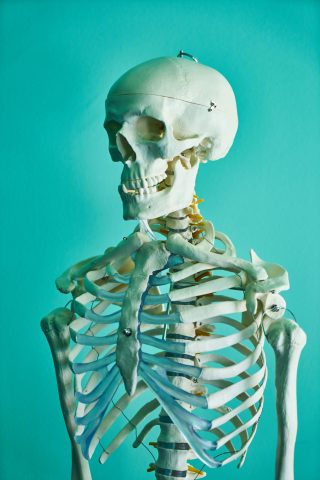
Science is the key to understanding the world around you. It is a fascinating subject because it teaches us about the world around us and how it works. You see science in everything from the food you eat and the clothes you wear, to the stars and planets above us! It’s used by nurses and doctors to save lives and change lives. In Science we problem solve by carrying out observations and experiments to investigate ideas.
Science at Penyrheol is fun!

Why is
Science
important?
Science is important because it develops your skills and knowledge to connect and apply ideas and be able to think creatively to change the World. It is what drives the creation of new technologies, provides us with the knowledge to understand the impact that humans are having on life on Earth. It gives us the skills and knowledge that we need to evaluate and change the impact of human actions. Science leads to medical advances that save lives. It investigates the deep oceans and infinite universe.
Our vision
Science at Penyrheol Comprehensive school is exciting, engaging and inclusive for all pupils. The development of our new 11-14 Curriculum for Wales focuses on developing learners that are ambitious, capable and resilient that understanding of their place in community both locally and globally.
Learners in science will understand the value of failure and how to fail forward. Each setback in science brings with it a new challenge and new learning opportunities. In the real world this is where the scientific breakthroughs happen and new discoveries are made. In the classroom this is where we refine our knowledge, understanding and scientific skills and become excellent scientists. Our classroom environments foster a culture where pupils are not afraid to have a go and fail, because we fail forward, refining our skills and understanding while developing resilience in a safe learning environment.
As our pupils move through Years 7 to 9 they will develop a deeper understanding by learning through our progression model. This will build detailed understanding and deepening knowledge as we work through the three years preparing pupils for GCSE courses.
Science teachers in Penyrheol are keen to develop their pedagogy to further enhance the learning environment. The culture of team effort, hard work and striving for our pupils is key to ensure all our pupils receive a top-class experience of science.
Assessment in science is through regular formative assessment tasks with either whole class feedback or response to assessment tasks. These ensure pupils go back and revisit errors, close the gaps in learning while developing key resilience.
Pupils who are successful in science will:
- Be able to question, solve problems and develop resilience through refining understanding from scientific inquiry.
- Be able to explain the ideas and concepts they are learning about and transfer this to real world situations.
- Understand how to interpret data and apply this to scientific concepts.
- Become ethical and informed citizens who can find, evaluate and use evidence in forming their own views.
- Engage with contemporary issues based upon their knowledge and understanding of science and the world.
- Show a commitment to the sustainability of the planet and their role in this.
Big questions in
Science
How do we become scientists?
What is energy?
Where does energy for life come from?
Why are food chains important?
Should we vaccinate?
Where are we in space?
What is an atom?
How are particles arranged?
What will your journey in
Science
look like?
The journey that you take through our curriculum is planned very carefully so that you will make steady progress and develop your knowledge and understanding of Biology, Chemistry, Physics and your practical skills as you move through our school.
Your journey in year 7 will start with the exhilarating topic ‘being curious’, here you will spend the first half term learning to think like a scientist. There are many practical lessons that will develop your laboratory skills and a number of theory lessons that will start to develop your scientific thinking.
These skills are vital for you to become a good scientist. From here we will spend time looking at each of the three disciplines in science: Biology, Chemistry and Physics, these will be studied in year 7, 8 and 9 where your knowledge and understanding will become more detailed and complex.
What will the study of
Science
encourage you to think about / do?
Through the study of science, you will develop your skills at thinking about ideas in a critical way. You will investigate ideas through carrying out experiments to find out if a prediction that you have made is right or wrong! As is quite often the case in the development on new scientific theories, scientist get it wrong an awful lot! It’s important to understand that the development of new ideas quite often comes with failure, it’s important to fail, it’s what drives forward change and learning! Therefore, in science we will learn to be resilient, ambitious and capable learners who will form new ideas and evaluate results to enable us to form opinions.
By evaluating sources of information as scientists you will become ethically informed global citizens. You will be able to explain the impact of farming, building and use of fossil fuels on the wider world and living things. You will understand what it means to live in a sustainable manner so that global resources, habitats and ecosystems are still available for future generations.
What opportunities for learning does the
Science
curriculum provide?
Biology in Year 7 will focus on how living things are grouped and how each of these groups are linked to each other in food chains. This work with be developed in Year 8 when you learn about how cells make organisms and how the organ systems of these organism’s work. Then in Year 9 you will understand why plants are important for life on Earth and discuss the question, ‘Why do we vaccinate?’ Understanding these topics, you will develop into ethical and informed citizens who can evaluate evidence and use this to form your own views and opinions.
Chemistry in Year 7 will start with looking at the states of matter, understanding that everything is made up of particles. This will build to develop an understanding that we can use special techniques to separate different mixtures. In Year 8 you will further develop your understanding of particles by looking at atoms, elements and compounds and how they combine to make new substances. There will be lots of practical work linked to acids and bases. In Year 9 you will look at the structure of an atom, you will revisit work on particle theory and be able to describe how changing the conditions of a reaction will change the rate of chemical reactions.
Physics in Year 7 will introduce the concept of energy, you will understand energy transfers within everyday objects, what forces are and how they act on objects around you. You will also learn what speed is and how we can calculate it. Then in Year 8 you will be able to make and explain simple circuits, explain what magnets are and how they are used in the real world. You will be able to explain where the energy we use in our homes and school comes from and how it is affecting the world. This will develop you as global citizens and develop your ability to live sustainably. In Year 9 you will learn about space, that final frontier when only a few humans have ever explored! You will be able to explain how heat is transferred and link this back to your homes. Further developing your understanding of the human impact on the world around you.
What skills will you learn in your study of
Science
?
You are a citizen of Wales and the world and Science will encourage and teach you to ask questions about the world around you.
- You will develop inquiry skills that will let you investigate the links between different variables while carrying out lots of exciting practical investigations.
- You will be able to write a method that a scientist could use to carry out an experiment.
- You will be able to make predictions based on your understanding of scientific theory before you carry out an investigation.
- You will be able to evaluate the reliability of data that you have collected from an investigation.
- You will be able to use ideas from a range of sources to be able to form your own opinions.
- You will also be able to evaluate the claims made in scientific articles and understand the difference between opinion and scientific fact.
How can you deepen your knowledge and understanding of
Science
?
Why not join the Science department’s Energy Council? The Energy Council monitors the school’s use of non-renewable and renewable energy. They take part in a number of in school activities to strengthen their understanding and knowledge and educate others. There are also a number of trips and visits linked with this club. Fancy riding a bike to power a disco? Well you can if you join the energy council!
Reading magazines like the ‘New Scientist’ and ‘Science + Nature’ that can you can borrow from the LRC, will also deepen your knowledge and understanding of Science and Technology.
Homework in year 7 will be sent via an online learning platform called Carousel Learning, access to this will be through Google Classroom. This platform will also enable us to create study packs of flash cards that pupils can use to test their scientific recall and create their own quizzes.
Go and visit local Science attractions, like Techniquest, Llanelli, Wetlands Centre, Oriel Centre run by Swansea University in Swansea, Plantasia Tropical Zoo, Gorseinon Library for interesting Science reading.
How does your study of
Science
support your study in other subjects?
Science is already three subjects: Biology, Chemistry and Physics. Each of these subjects links closely with each other and your understanding in one area will help to develop your understanding elsewhere.
There are also strong links between Science and Maths, the skills you develop, such as: drawing a results table, calculating a mean, drawing a graph, working out a percentage, rearranging equations (studied in maths) will all be used during your study of Science.
Science also links closely to Geography, when looking at topics like global warming and the structure of the Earth, volcanoes and earthquakes and sustainable living and our impact as global citizens.
Science links with technology, in both subjects you need to problem solve, be creative and plan investigations and products. There are a large number of further education and careers that link Science, Maths and Technology.
Science links with English, reading and writing are a key part of science, but you will also use the debating skills you develop in English to argue your view and opinions about the vaccination debate. The evaluative skills you use when reading text in English will be valuable when reading scientific articles to help you form your own opinions.
How can
Science
support you in the future?
Through all of your time studying Science you are developing yourself as ambitious, capable learners, who are able to question and evaluate scientific ideas and articles. Play a key role in your understanding about your own body and health. Become informed, ethical Global citizens who are able to live sustainably and understand your impact on the world around you.
You can study A Levels in Biology, Chemistry, Physics, Geology, all these will lead on to undergraduate degrees at universities all over Wales and UK.
There are a host of Science related degrees, such as Medicine, Veterinary science, Pharmacy, Engineering, Zoology, Biomedical sciences, Biochemistry, Aeronautical Engineering, Physics, Geology to name a few.
- Doctor
- Nurse
- Vet
- Engineer
- Pharmacist
- Marine Biologist
- Physiotherapist
- Forensic scientist
- Food technologist
- Microbiologist
- Nanotechnologist
- Science Teacher