

History
What is
History
?
History is the study of the events, people and processes that have led to and shaped the way in which we live in the modern world.
Why is
History
important?
The study of History is essential if we are to understand how and why the world in which we live was formed. History teaches us the story of how we came to be the people we are to today. It educates and informs us about the journey we’ve taken as people in cultural, political and economic terms. It helps us all to understand the diversity of factors that have shaped our existence and those of our forebearers.
The study of History is also crucial to developing skills that further enable us to form an understanding, through the acquisition of historical knowledge and its effective use. From Year 7 you will learn key historical skills that will be built upon throughout the studies you undertake in our classrooms. You will develop an awareness of chronology, by learning how societies developed through time.
You will learn how to analyse the causes and consequences of key events and develop an understanding of how and why different views or interpretations of history can be formed. You will also undertake independent research to find out for yourselves about historical events and figures. You will also learn how to express your historical knowledge and understanding through developing well-constructed arguments that display good standards of literacy and communication.
The study of History and your development as a young historian will help you to understand current events and make you a more informed, ethical citizen of the world.
History at Penyrheol Comprehensive School is very popular. We choose what aspects of History we teach in Years 7-9 very carefully to make the study of History as exciting, engaging and inclusive as possible for all pupils. Our Curriculum for Wales continues to focus on developing learners that are ambitious, capable and independently informed. We aim to help learners to develop an understanding of their place in our community, on a local, national and global scale.
Our Key Stage 3 curriculum is based upon providing learners with a chronological sweep of History that will enable them to develop a deeper understanding of the social, political, economic and military factors that have shaped the development of Wales and the wider world. By learning through our progression model, they will they will broaden their historical knowledge and be able to rationalise and contextualise historical trends, events and developments, Our progression curriculum will broaden learners’ historical knowledge and help them to think about historical trends, events and developments.
Our history classrooms are exciting and positive learning environments created through the fostering of positive pupil-teacher relationships. Above all, we place an emphasis on developing learners as individual, critical thinkers with an enthusiasm and passion for History and what we can learn from it.
Our vision
Our overarching vision is to create learners who:
- Consider that every lesson has improved their knowledge and who can, over a period of time, see their historical skills improving.
- Are able to provide coherent and well-written explanations of how and why different historical interpretations exist.
- Consistently apply their improving historical knowledge and understanding to identify trends in causation and consequence.
- Can identify the significance of historical events and explain the positive and negative effects on different sections of society.
- Recognise the contributions made to History by a wide variety of groups and thereby further their individual development as ethical, informed citizens.
- Engage with contemporary issues based upon their historical knowledge and understanding and therefore not judge the past through the prism of the present.
Big questions in
History
History is a subject that makes you question the processes that have led to where we are today as a society.
You will learn how conflicts have shaped the development of our nation, the United Kingdom, Europe and the wider world. The study of the impact of events such as the Industrial Revolution will lead you to raise questions such as ‘What was the effect of the process on the lives of people during this period and beyond?’. Such questions will be increasingly diversified, as you look at the impact of change in terms of politics, religion, economics and their impact upon the human condition.
What will your journey in
History
look like?
The journey that you take through our curriculum is planned very carefully so that you will make steady progress. Your time in Year 7 will be spent studying the key events that shaped the Medieval world. The programme of study for Year 8 continues the chronological coverage of History by examining the Early Modern period, which is finally built upon in Year 9 by covering the period 1700-1918. This sweep of History will enable you understand how people and societies have developed and progressed over a period of several hundred years.
Throughout each year you will develop and use your historical skills, which will be reinforced to ensure that progression takes place, continually improving your knowledge and understanding of historical events. Whilst we teach History in a way that deals with the stories of people and societies, you will also develop an understanding of the changes that have taken place through themes that are repeated, for example, changes in lifestyle, politics, religion, conflict, technological change, citizenship, equality and diversity.
What will the study of
History
encourage you to think about / do?
Through your study of History, you will be encouraged to use the increasing depth of your historical knowledge to think critically about how and why events, processes, changes and societies have developed. You will begin with learning how medieval society was organised and how the lives of people were shaped by the challenges they faced. This will continue into Year 9 where the threads of society, economics, politics, religion, rights, conflicts, as well as others, will encourage you to develop an understanding of not just how the changes have impacted upon peoples, but also how continuity has existed throughout the centuries in certain areas.
What opportunities for learning does the
History
curriculum provide?
From Year 7 you will have the amazing opportunity to study the history of our Welsh nation and how people’s lives have shaped it. This history will be set in the context of our relations will the other home nations, Europe and the wider world. You will examine and have the opportunity to study and develop an understanding of how we developed as a people, from the eleventh century onwards.
As you progress through school you will be introduced to new concepts, challenging ideas, change and continuity. You will be shown how to analyse different interpretations, to deal with truths that may be uncomfortable in the context of the modern world. You will understand that the morals of the present cannot be simply used to judge the actions of peoples in the past. This will help you to make informed, independent decisions and not to ‘follow the crowd’.
What skills will you learn in your study of
History
?
In undertaking the study of History, you will develop an understanding of how people and societies have developed and changed. You will learn how to place events, people and processes in their correct historical context, through a deepening understanding of chronology. You will develop and progressively deepen your historical knowledge and understanding which will enable you to contextualise events and changes – in other words, why did certain things happen at a particular time?
Studying History will enable you to understand and explain how and why different historical interpretations have been formed, taking account of bias, purpose and audience. You will learn how to undertake the process of accurate historical research, seeking and collating information from a wide range of historical sources. You will progressively develop the ability to present the findings of your historical research in a variety of ways to your prospective audience.
You will learn how to organise your work effectively, making good use of correct historical terminology, correctly contextualising events and presenting your work in variety of mediums. You will become an independent, critical thinker and will not be afraid to ask the difficult questions.
How can you deepen your knowledge and understanding of
History
?
The History Department always encourages students to further develop an interest in the subject by reading age-appropriate material such as the ‘Horrible Histories’ series. Extracts from more challenging texts are provided in our classrooms and will give you the opportunity to read historical material that has impacted upon people’s lives.
Similarly, given the popularity of History on television and the internet, we recommend programmes to students that will provide them with interest and enjoyment. For example, the ‘Simple History’ series on YouTube is an excellent way of introducing yourself to topics of interest.
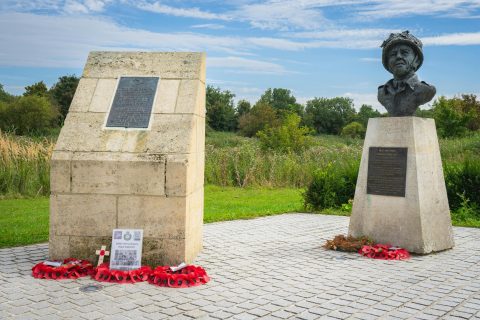
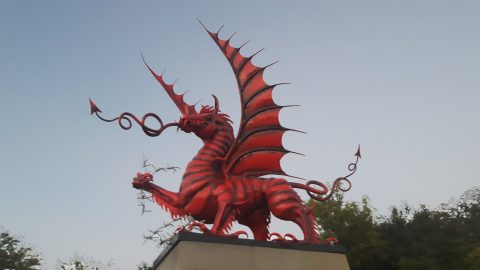
The History Department often offers you the chance to go on educational trips – including traveling abroad! Over the past twenty years we have run several tours to the First World War Battlefields in Belgium and France. We have also visited the Second World Battlefields in Normandy and undertaken a trip to Krakow in Poland, including a visit to Auschwitz. Year 7 have also, on many occasions, visited Kidwelly Castle as part of their studies into castles and how they developed. Our trips are always extremely popular and our pupils love them!
How does your study of
History
support your study in other subjects?
Your study of History will help you to develop your writing skills, formulating and writing extended responses that will benefit you across all the other subjects where such writing is required. The increasing development of your analytical skills in evaluating source material will allow you to effectively transfer these skills to those subjects where material is similarly evaluated.
Being able to undertake effective research and present your findings will be of increasing use to you across disciplines, be they arts based, or science based. Understanding how and why different interpretations are formed will help you to develop into an independent, critical thinker, one who is able to judge the reliability and usefulness of evidence.
History touches on so many other subjects – Religious Education, Geography, English Literature are just a few. Your deepening historical knowledge and understanding will help you in your study of other subjects – you will know why these things happened.
How can
History
support you in the future?
We offer the study of History up to GCSE Level. Our results have always been excellent, particularly at A*-A grade and partly as a result of this, many of our students choose to continue their historical studies at A Level, which of course is something we fully encourage. Similarly, over the years, many students have undertaken a History degree, which is offered at all the country’s top universities, sometimes combining the degree with Art, Politics, Law, Philosophy or English.
Your ability to evaluate evidence, conduct independent research, construct persuasive arguments based on knowledge and sophisticated understanding and most importantly, expertly communicate your ideas in a fluent, coherent style are all traits that are greatly valued by employers in a wide variety of fields.
The fact that you have been able to study History will certainly help your future applications be they for colleges, universities, apprenticeships or employment.