

Art
What is
Art
?
“Creative work combines knowledge and skills using the senses, inspiration and imagination”
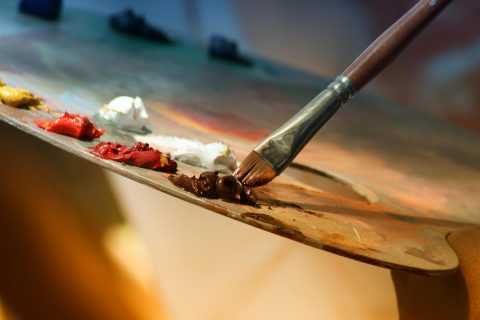
Art at Penyrheol is an exciting discipline that gives you the opportunity to express your creative skill and imagination, typically in a visual form such as painting or sculpture. Such work is to be appreciated for its beauty and emotional power.
Why is
Art
important?
Art is an extremely popular subject in Penyrheol where the aim is to allow you to express your individuality and creativity. It’s an exciting and an enriching subject where you get to experiment with a wide range of creative experiences in 2D and 3D form. The study of Art in Penyrheol will give you the opportunity to express yourself in different ways and be creative. Art can also build your confidence as well as give you a sense of individual identity. Studying Art as a subject helps to develop your critical thinking and the ability to interpret the world around you. You will learn to appreciate artefacts (ancient objects) and understand why they were created. As you learn about Art history, it will help you to understand and appreciate different cultures. Seeing a different culture explored through a visual medium such as sculptures or paintings helps you to process information in a different way. The arts also strengthen problem solving and critical thinking skills. When you are making a work of art, the process includes conceptual and interpretational thinking that helps build critical thinking skills including observation, reasoning, and problem-solving. During the creative process you will use logic and problem-solving strategies of how to reach your intended outcome. Critical thinking skills are also in play when observing and analysing famous works. This ability to think critically to solve problems in a unique way is key to the 21st century workplace. You are free to explore ideas, experiment and try out new ideas whilst learning various skills.
Our vision
The aim of the Art Department in Penyrheol is to develop a range of artistic skills in all pupils at all levels by having high expectations of what our learners can achieve. The Art department will teach a knowledge-rich curriculum, providing learners with thought provoking, challenging questions that will allow them to develop their artistic and creative skills to produce high-quality end pieces that they are incredibly proud of and want to share with others.
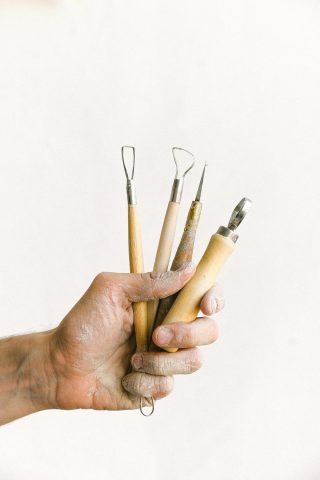
At Penyrheol, Art will enable the learners to communicate what they see, feel and think. Through Art, they will express emotions, interpret observations and accentuate their individuality. Learners will experiment with their ideas, their use of colour, texture, form, pattern and different materials and processes therefore enabling them to continue to develop their skills in drawing, painting, sculpture and other art, craft and design techniques.
The Art department aims to provide the opportunity for our pupils to develop a deeper understanding of art and design by exploring various artists, craft makers, designers, and understanding the historical and cultural development of their art forms and their impact on culture and history. Pupils will be introduced to various cultures where they will recognize one another’s worth and diversity.
- develop our pupils’ ability to draw confidently and adventurously from observation, memory and imagination.
- encourage and develop creative thinking.
- develop pupils’ ability to reflect on, analyse and critically evaluate their own work and that of others.
- provide pupils with exciting opportunities to explore and use new materials.
- instil a passion for and a commitment to the subject.
- aid pupils’ understanding of the role of artists, crafts people and designers – past and present.
- encourage pupils to view their environment and the world around them and use it as artistic inspiration.
- encourage and develop independent learning.
- build confidence and a sense of pride in our pupils.
- provide opportunities outside the classroom such as competitions, clubs and workshops.
- provide pupils with the creative tools to express themselves.
Big questions in
Art
We will be answering some of the big questions and studying the big concepts in Art. For example,
How did the invention of the camera change the way artists painted?
Why did artists start to experiment with various materials focusing on emotions rather the traditional paintings of the Renaissance period?
Why are skulls and skeletons important in Art?
How does scale change the way we view a piece of Art?
Why is the colour wheel important?
What will your journey in
Art
look like?
The journey that you take through our curriculum is planned very carefully so that you will make steady progress in Art. Our exciting curriculum in KS3 supports you to develop skills in painting, drawing, clay and sculpture work and you will learn a variety of techniques along the way. You will develop knowledge of famous and interesting artists and their styles. You will also learn about historical events including various cultures and their artefacts.
Year 7-9
| Project 1 Autumn term – Spring term | Project 2 Spring term – Summer term |
|
|---|---|---|
| Year 7 | Aboriginal Art | Greek Theatre |
| Year 8 | Portraiture | Day of the dead |
| Year 9 | Sweets Large Scale Sculputures | Photography – ‘It’s a small world’ Introduction to GCSE Art |
In year 7 you will learn all about...
What can we learn from Aboriginal Art
In Year 7, you will develop drawing, printing and ceramic skills through a study of fascinating Aboriginal art. Within this exciting and interesting unit, you will learn creative skills by delving into the history of the Aboriginal people. You will create an x-ray fish based on prehistoric Aboriginal cave art and you will experiment with mono printing. You will learn to draw symbols from aerial view and create a drawing of your journey to school in the style of Aboriginal paintings. Ideas and intentions will be developed by using your imagination to create a polystyrene print and you will focus on decorating your design with witchetty grubs, honey ants and dots using chalk pens. The fun doesn’t stop there! You will have the opportunity to design a boomerang and create it using clay. You will also decorate and paint it!
How do we learn to draw portraits using Greek Theatre Masks?
In this unit, you will be given the exciting opportunity to learn about the Greek Gods and their powers through the study of art. You will learn about Greek theatre, Dionysus, Satyr and Medusa and create wonderful masks based on mythical stories of different creatures or Greek Gods. To start the project, you will be taught how to draw a portrait, focusing on using the correct proportions of the face. You will then create a 3D mask of your choice based on Greek mythology using papier mâché which is messy and fun! To create an ‘old’ effect, you will finally apply black tissue paper and dab with gold/silver metallic paint.
In year 8 you will learn all about...
What painting skills can we learn from the expressionists?
In this project, you will learn about the various styles of different artists throughout time and will engage in experimenting with a range of various materials including developing painting skills. You will research Picasso, Edvard Munch and various artists who created expressionist paintings. Learning about these artists will inspire and enrich your knowledge of famous portraits created by well-known famous artists. The outcome will be to produce a painting in the style of one of the artists researched. Whether it be a water-colour painting, a large print with a painted background or a Pop Art style painting using ICT skills – the choice is yours!
How do we use the colour wheel to create different tones in our artwork?
In Year 8, you will learn to draw in proportion, paint with skill and create a ceramic mask. As well as learning about the art of the ferocious Aztecs you will be introduced to the Mexican culture where you will learn about the Day of the Dead. This includes drawing, focusing on tone and mark-making which will then lead to developing ceramic skills.
Within this project, you will explore the wonderful, vibrant, Mexican annual celebration of ‘Day of the Dead’ to help you learn about sketching, the colour wheel and using different tones in your work. You will learn about the Mexican and Aztec civilization and their religious beliefs, celebrations, and artefacts. You will produce a mind map on the Mexican traditions focusing on producing an accurate realistic skull drawing and sugar skull, decorated with marigold flowers for the background. The marigold is the traditional flower in Mexico known as ‘the flower of the dead’! Your work will be highly decorated and sketchbook work will provide reference for your outcome of a clay sugar skull which will be bright in colour and highly decorated with various patterns.
In year 9 you will learn all about...
You will be given the thrilling opportunity to develop drawing & painting skills by learning about tone, colour blending and additional detail. You will also get the opportunity to develop 3D skills further by experimenting with sculpture work or creating a painting based on sweets! In the second project you will have the opportunity to draw in an unconventional way by drawing with light! The elements of photography will be introduced where you will be introduced to various photographers.
Symmetry, accuracy and detail in artwork
The contemporary artist Sarah Graham will inspire you to create realistic drawings focusing on symmetry, accuracy and applying detail. Sketchbooks will be used to develop ideas where you will draw various logos of famous brands and learn how to draw various shapes of different sweets. You will also be introduced to the amazing artist Peter Anton who creates realistic, 3D, extremely large sculptures of sweets and comfort food. You will then create a sculpture of a giant lollipop or a huge doughnut! You will apply detail to your work and will develop painting skills, focusing on blending and application of paint to try to make your work look as realistic as possible. In this project, you will work in pairs or in a group and work as a team to identify any problems and learn to overcome them, when working with sculpture and realism.
Photography
Photography at Penyrheol School is a new course designed to broaden your understanding of a variety of photographic techniques and processes. You will learn about basic photography skills including the rule of thirds, perspective, angles, and digital manipulation to create exciting photographs of miniature models and creating wonderful scenes inspired by the artist David Gilliver. This project will teach you to look at the world in a very different and creative way. When researching photographers, it will enable you to apply creative, analytical and critical thinking.
What will the study of
Art
encourage you to think about / do?
The arts encourage an improved understanding of self-confidence. Art introduces you to various avenues of self-expression and allows you to be creative. It encourages thoughtful conversation and understanding that there is more than one approach to everything. Art makes you more observant, enhances problem solving skills, boosts self-esteem and provides a sense of accomplishment.
What opportunities for learning does the
Art
curriculum provide?
You will learn about the importance of Art in the world. From prehistoric cave drawings to ancient instruments and drawings of the human anatomy, it is obvious that art has always been and will continue to be a vital, interwoven part of our existence. Without cave markings and ancient artefacts that have been dug up, a lot of what is now known about prehistoric times would have remained a mystery! Likewise, the different types of art that we see in today’s society will help future generations understand what the world was like before they came along. Through your study of Art, you will be exposed to a wide variety of works from different cultures and artists from different Art movements both contemporary and traditional. You will understand that Art has a strong cultural context and that we can learn things about people, countries, cultures and history through Art. You will understand the term ‘movement’, which is a style within Art that has a common philosophy or goal, and the way in which movements evolved and changed throughout the 19th, 20th and 21st centuries. As well as appreciating the artistic work of others, you will understand the techniques that have been used, the intentions of the work and the ways in which people responded to the pieces when they were first created.
What skills will you learn in your study of
Art
?
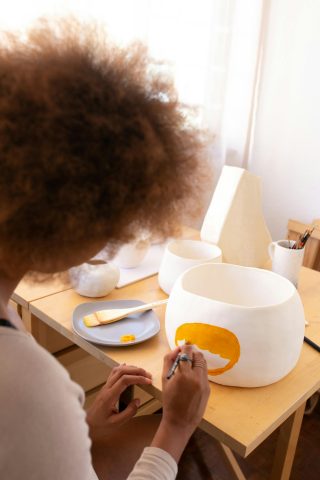
The study of Art will teach you how to research and investigate how other people and cultures create various artwork. You will learn to find, evaluate and use evidence in forming views and create artwork like the artists of study. As a citizen of Wales, you will learn to be knowledgeable about your culture by being introduced to Welsh and local artists. You will learn various drawing skills where you will develop printing, painting, 3D sculpture work and clay techniques.
How can you deepen your knowledge and understanding of
Art
?
The Art department offers lots of great opportunities for you to really engage with creativity and use your imagination. We have extra-curricular activities such as ‘Anime Club’ which is proving to be highly popular and successful. You could join our lunchtime and after school club to continue with your studies. Google classroom is also filled with lots of interesting resources if you wanted to practice drawing skills in your own time. Exciting Art trips to Cardiff Museum, St Fagan’s and the Botanical Gardens are organised each year. Independently you could also visit local Art galleries such as The Glynn Vivian, Swansea Museum or The Dylan Thomas Centre in Swansea which display exhibitions of local artists.
How does your study of
Art
support your study in other subjects?
Art makes strong links with so many other subjects such as religious education learning about the spiritual festival of Day of the Dead and you will also learn Spanish key words linked to the topic. Art has strong links to Geography because you will learn about the Aboriginal culture of Australia and you will produce a map based on their journey home. When studying portraiture, you will learn historical facts about Hans Holbein and Henty VIII, you also learn why Art in the early 20th Century changed due to the invention of the camera. Mathematical techniques are used to develop drawing skills as you use symmetry, tessellation, measuring techniques and consider various scales when creating artwork. You will develop your literacy when you research artists and the subject-specific language of Art is used to discuss your work and the work of others. Research of an artist can be really engaging as you can create a Facebook page, a wanted poster and a newspaper article.
How can
Art
support you in the future?
Of course, we offer the study of GCSE Art and Photography, and we encourage your continued study in this fantastic subject which could lead to the study of ‘A’ levels and various Art degrees at university. The very fact that you have been able to use creative thinking will help your future application for colleges, universities, apprenticeships, or employment. Creativity, imagination and problem solving is looked fondly upon by many colleges and companies. Art can open the door to lots of exciting careers, such as:
- exhibition design
- graphic designer
- media journalism
- photographer
- retail design
- textiles design
- video game designer
- visual media
- advertising
- animator
- architect
- fashion designer
- hair and make-up design
- illustrator
- interior design
- jewellery design
- museum curator
- product designer
- publishing
- teaching
- theatre designer